Tricks to Learning ACE Inhibitors: The Ultimate Student Guide
From Confused to Confident in One Read
If you've ever stared at a medication list packed with lisinopril, enalapril, and captopril and thought, "How am I supposed to keep all of this straight?" — you're not alone. ACE inhibitors are among the most commonly prescribed medications in clinical practice, which means whether you're a nursing student, pharmacy student, or medical learner, you will encounter these drugs every single day of your career.
The good news? Once you understand the core mechanism and lock in a few clever memory tricks, ACE inhibitors become one of the most logical drug classes to master. Let's break it all down — from how they work, to what to watch for, to the mnemonics that will save your exam grade and, more importantly, your patients.
Step One: Recognize Them Instantly
Before anything else, here's your first and easiest trick:
Every ACE inhibitor ends in "-pril."
Lisinopril. Enalapril. Captopril. Ramipril. Benazepril. Fosinopril. See them on a med list, a test question, or a prescription pad — and you'll immediately know what drug class you're dealing with. This is an absolute high-yield NCLEX and board exam recognition point, and it takes about five seconds to memorize.
How Do ACE Inhibitors Actually Work?
Understanding the mechanism doesn't have to feel like reading a textbook in another language. Here's the simplified version:
Your body has a system called the Renin-Angiotensin-Aldosterone System (RAAS) that regulates blood pressure and fluid balance. When blood pressure drops, the kidneys release renin, which triggers a chain reaction:
Renin → Angiotensin I → (ACE enzyme) → Angiotensin II
Angiotensin II is the villain here. It causes blood vessels to constrict and triggers the release of aldosterone, which makes your kidneys hold onto sodium and water — both of which raise blood pressure.
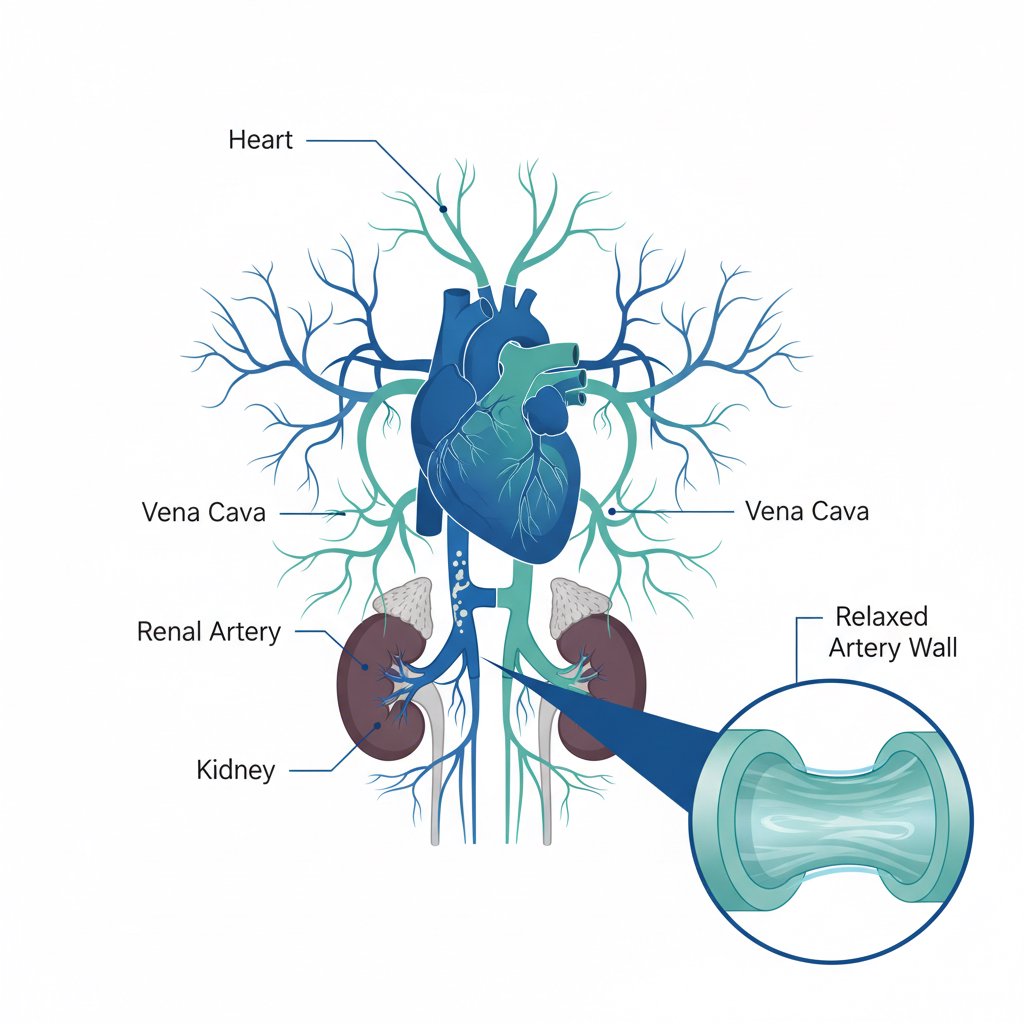
ACE inhibitors block that converting enzyme, stopping Angiotensin I from becoming Angiotensin II. The result?
- ✅ Vasodilation (blood vessels relax)
- ✅ Less aldosterone (less sodium and water retention)
- ✅ Lower blood pressure
- ✅ Reduced strain on the heart and kidneys
Memory trick: Think of ACE inhibitors as throwing a wrench into an assembly line. The factory (RAAS system) is trying to build the troublemaker (Angiotensin II), and ACE inhibitors stop the production line cold.
One important bonus effect: blocking ACE also causes a buildup of bradykinin, a natural vasodilator. This is helpful for blood pressure control but is also responsible for some of those classic side effects we'll talk about next.
When Are ACE Inhibitors Used?
ACE inhibitors aren't just for high blood pressure. They're considered first-line or strongly indicated therapy for:
- Hypertension
- Heart failure with reduced ejection fraction (HFrEF)
- Post-myocardial infarction (to prevent cardiac remodeling)
- Chronic kidney disease (CKD) with proteinuria, especially in diabetic nephropathy
- Stable coronary artery disease (CAD)
Think of them as the drug class that protects the heart and the kidneys simultaneously — a rare and valuable dual benefit in pharmacology.
The "ACE" Mnemonic: Never Forget the Side Effects
Here's where mnemonics really shine. The three most critical side effects of ACE inhibitors can be remembered simply as A-C-E:
- A — Angioedema
- C — Cough (dry, nonproductive)
- E — Elevated potassium (hyperkalemia)
The Cough
That notorious dry, nonproductive cough affects 10–20% of patients taking ACE inhibitors. It's caused by the bradykinin buildup we mentioned earlier. Here's the key clinical point: this side effect is idiosyncratic, not dose-dependent. Lowering the dose won't make it go away. If a patient develops a persistent, bothersome cough, the prescriber will typically switch them to an ARB (angiotensin receptor blocker), which doesn't affect bradykinin levels.
Angioedema
This is the "never miss" side effect. Angioedema is a potentially life-threatening swelling of the lips, tongue, face, or throat that occurs in less than 1% of patients overall — but the risk is 2–3 times higher in Black patients compared to white patients. Educate every patient: if they experience swelling of the face or difficulty breathing, they must stop the medication immediately and seek emergency care. This is not a "call the doctor in the morning" situation.
Elevated Potassium (Hyperkalemia)
Because ACE inhibitors reduce aldosterone, less potassium is excreted. The result can be dangerously elevated potassium levels — especially in patients with renal failure, diabetes, or those taking potassium-sparing diuretics. A potassium level above 6.0 mEq/L is a medical emergency and can trigger cardiac arrest.

The CAPTOPRIL Mnemonic: Deep Dive for Advanced Learners
Want to go beyond the basics? Use the drug name CAPTOPRIL itself as your mnemonic for side effects and contraindications:
| Letter | Meaning |
|---|---|
| C | Cough (dry, nonproductive) |
| A | Angioedema |
| P | Potassium elevated (hyperkalemia) |
| T | Taste changes (rare) |
| O | Orthostatic hypotension |
| P | Pregnancy — absolutely contraindicated |
| R | Renal artery stenosis — contraindication |
| I | Increased creatinine |
| L | Leukopenia (rare, particularly with captopril) |
Print this out. Tape it to your wall. Thank yourself later during boards.
Critical Nursing & Medical Considerations
Before You Start the Drug
Always establish a baseline. Before initiating an ACE inhibitor, document:
- Blood pressure
- Renal function (creatinine, eGFR)
- Electrolytes, especially potassium
- Pregnancy status for women of childbearing age
Ongoing Monitoring Schedule
Check potassium and creatinine at 1–2 weeks after initiation, then at 1 month, 3 months, and every 6 months thereafter. A modest creatinine rise is expected and acceptable. However, if creatinine rises more than 30%, this is a red flag for possible renal artery stenosis or excessive hemodynamic impact and warrants urgent reassessment.
The Pregnancy Black Box Warning
This cannot be overstated: ACE inhibitors are absolutely contraindicated in pregnancy (Category X). Continuing them into the second or third trimester can cause fetal anuria, hypotension, skull hypoplasia, renal failure, and death. Women of childbearing potential must be counseled about reliable contraception and instructed to stop ACE inhibitors immediately upon a positive pregnancy test.
Renal Artery Stenosis
ACE inhibitors are contraindicated in bilateral renal artery stenosis or unilateral stenosis in a solitary kidney. In these cases, the kidneys depend on the constrictive effect of Angiotensin II to maintain glomerular filtration pressure. Remove that angiotensin, and perfusion collapses — triggering acute renal failure.
Fall Risk
Orthostatic hypotension is a real concern, especially in elderly, volume-depleted, or diuretic-treated patients. Always perform a fall risk assessment, implement fall precautions where appropriate, and educate patients to rise slowly from lying or sitting positions.
Patient Education: What Your Patients Need to Know
Great pharmacology knowledge doesn't help patients unless it's communicated clearly. Here are the non-negotiables for patient counseling:
- "Take it at the same time every day" — Consistency matters for blood pressure control.
- "Don't stop suddenly" — Abrupt discontinuation increases cardiovascular risk.
- "Watch what you eat" — Avoid potassium-rich foods (bananas, oranges, tomatoes, dried fruits) and potassium-containing salt substitutes to reduce hyperkalemia risk.
- "Stand up slowly" — Dizziness and lightheadedness are common at first.
- "A dry cough may develop" — It's a known side effect; report it if it becomes bothersome, but don't panic.
- "Swelling of the face or throat = emergency" — Angioedema requires immediate action.
- "Check your blood pressure at home" — Record readings and bring them to follow-up visits.
- "Tell your provider immediately if you're pregnant or trying to conceive."

Quick-Reference Summary: The High-Yield Takeaways
✔ "-pril" = ACE inhibitor — recognize them instantly ✔ Mechanism: Block ACE → less Angiotensin II → vasodilation + less aldosterone ✔ Uses: HTN, HFrEF, post-MI, CKD with proteinuria, diabetic nephropathy ✔ Side effects (A-C-E): Angioedema, Cough, Elevated potassium ✔ Monitor: BP, potassium, creatinine/eGFR — before and regularly during therapy ✔ Contraindications: Pregnancy (Category X), bilateral renal artery stenosis, severe hyperkalemia ✔ Black box warning: Pregnancy — causes fetal harm and death ✔ Higher angioedema risk: Black patients (2–3× increased risk) ✔ Emergency signs: Facial/tongue swelling → stop drug, call 911
Final Thoughts
ACE inhibitors are a cornerstone of modern cardiovascular and renal medicine. They're powerful, versatile, and highly effective — but they come with a specific set of caveats that every clinician must know cold. The good news is that with the right mental frameworks, from the "-pril" suffix trick to the CAPTOPRIL mnemonic, these drugs become remarkably approachable.
Master the mechanism, respect the contraindications, educate your patients thoroughly, and monitor diligently. Do those four things, and ACE inhibitors will go from one of the most intimidating drug classes to one of your strongest topics. Your patients — and your exam scores — will reflect it.
Have a question about ACE inhibitors or a mnemonic that works for you? Drop it in the comments below — let's learn together!